Cameras, quartz, and computers
*highlighted text has a footnote
I had been working professionally as a software developer for a little over 4 years up until very recently. Granted, I still work for the same company and for the same pay. Sure, I’m still at the same desk, and they even let me keep my title. But I’ve lost my job. I do something else now. I still talk to a machine, but now it talks back. I train it and it trains me to train it and I’m putting out more features than ever. It makes my job easier, but I feel an aversion to it for some reason. Maybe I don’t like it because programming used to wrinkle my brain, and using AI just makes it smooth. I suppose AI could be wrinkling my brain in a new way, and maybe I’m just a neo-luddite¹ curmudgeon that’s afraid of change. Either way, AI has drastically changed my day-to-day at work, and thus the day-to-day of my life. I worry that I’ve lost something.
Perhaps it would be helpful to imagine myself as a painter when the camera was first invented. My utility has been replaced by a cheaper, faster, and technically better technology. People don’t need portrait painters in the quite the same way anymore. But then again, the camera freed painting from having to represent some external reality. Painters looked inward, rebelled against the camera, used unnatural colors, left their brush marks visible, painted starry night while everyone marveled at photographs. The camera seems to have been a necessary link in the chain of art history that led to abstract art, and some of my favorite artists. While tech’s fidelity got higher and higher², artists went the opposite direction and got weirder and weirder. Maybe AI is freeing me from something?
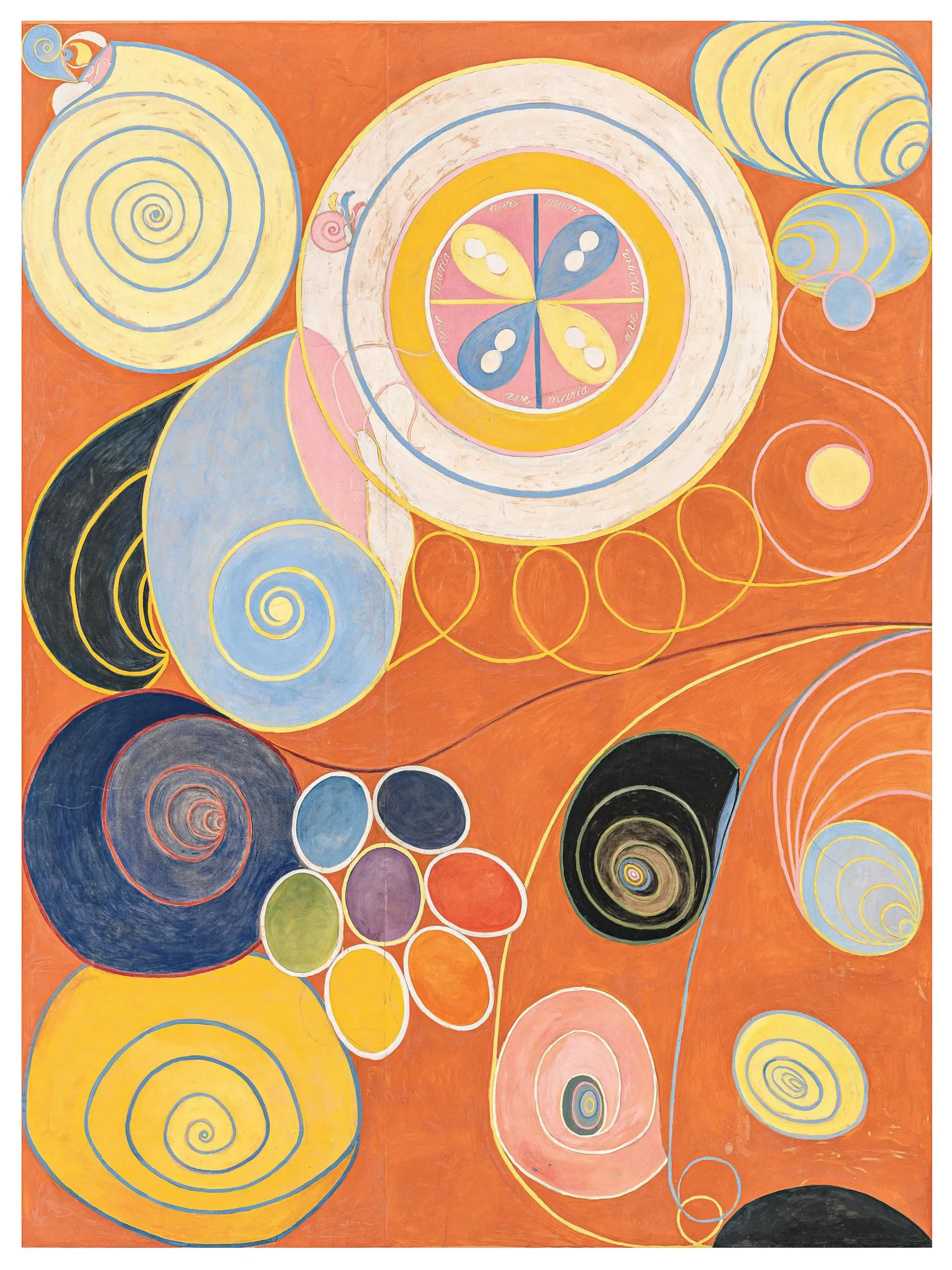
Group IV, The Ten Largest, No. 3, Youth
Hilma af Klint, 1909
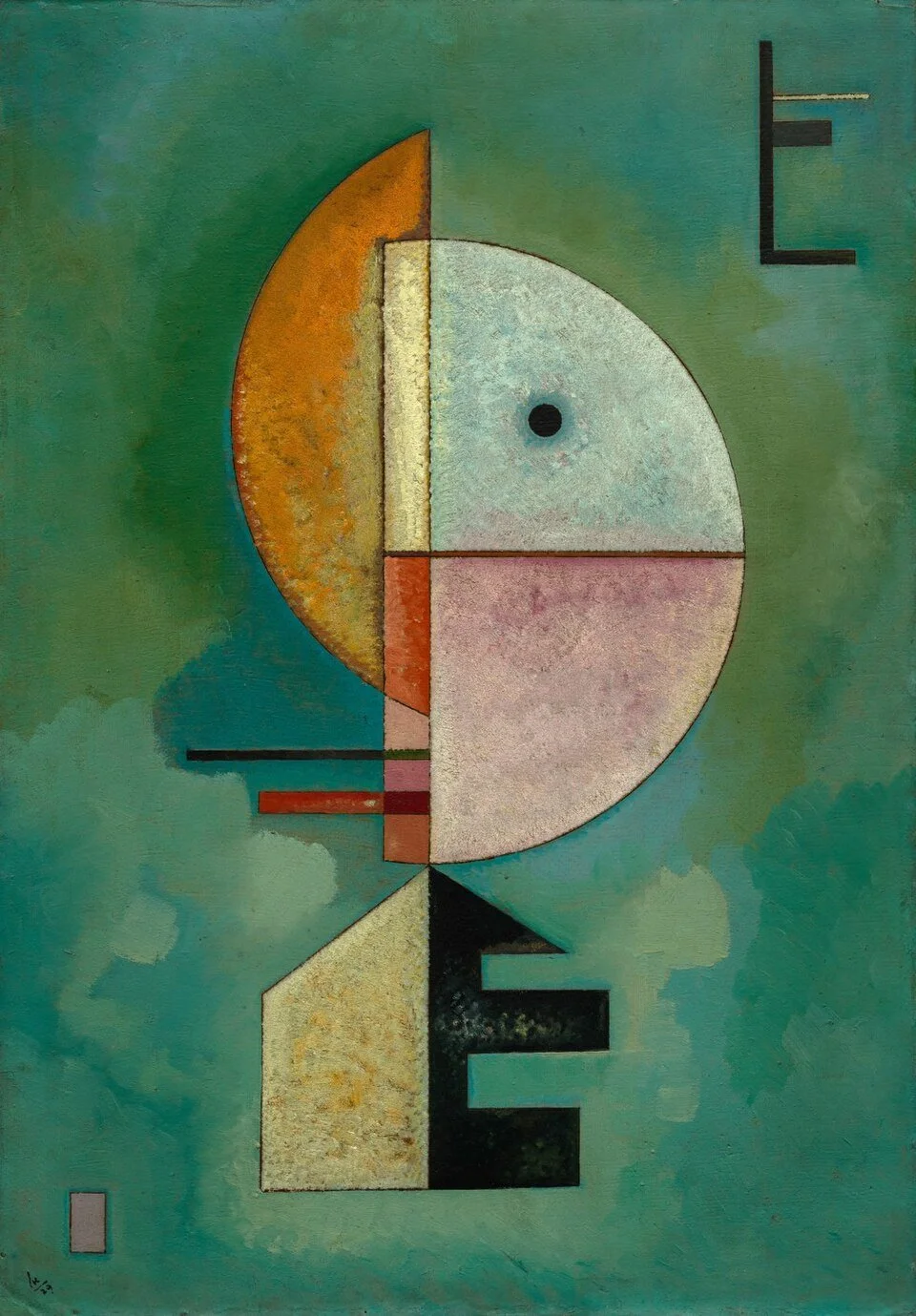
Upward
Wassily Kandinsky, 1929
But it doesn’t map perfectly to my situation because I don’t program for the same reasons that I paint.
I suppose I could try and figure out what “abstract code” is like, but it seems somewhat silly. I code for utility. My cousin, who is a brilliant software dev, once asked me if programming could be considered art. I don’t remember exactly what I said at the time, but these days I lean towards no. I think there can be artistic parts of code, or you can do it in an artistic way, but code itself isn’t art. I think for something to be art it has to be seemingly useless.
So what’s a historical example that’s a little closer my situation? Well, let me tell you about the most recent expensive hobby I’ve been indoctrinated into. Wristwatches. I bought myself a nice watch for my 27th birthday last year because it felt very adult and also very symbolic of me entering my late twenties³. Anyway, I had the watch for a couple of weeks before I noticed it said ‘Swiss Quartz’ on it. Naturally, I Googled it. In Alice’s Adventures in Wonderland, Alice sees a white rabbit check his pocket watch and chases the dapper fellow “down the rabbit hole”. Call me Alice. Basically it’s a battery powered watch⁴, as opposed to a mechanical watch which is powered entirely by a wound up spring.
Up until 1974, Swiss mechanical watches dominated the world market. In fact, they made almost all the watches for both sides in both world wars. Their watches were most the accurate, durable, and difficult to make. The least complex mechanical watch with manual winding and three hands tends to have upwards of 70 parts. Some of them, dive watches, can withstand the pressure of being 12,800ft under water. Some of them have a “perpetual calendar” which will accurately show the day and date for the next hundred years. These types of features are delightfully called “complications”. And they all fit in a 40mm disk on your wrist. The pieces are so small that watchmakers have to sharpen their screwdrivers.
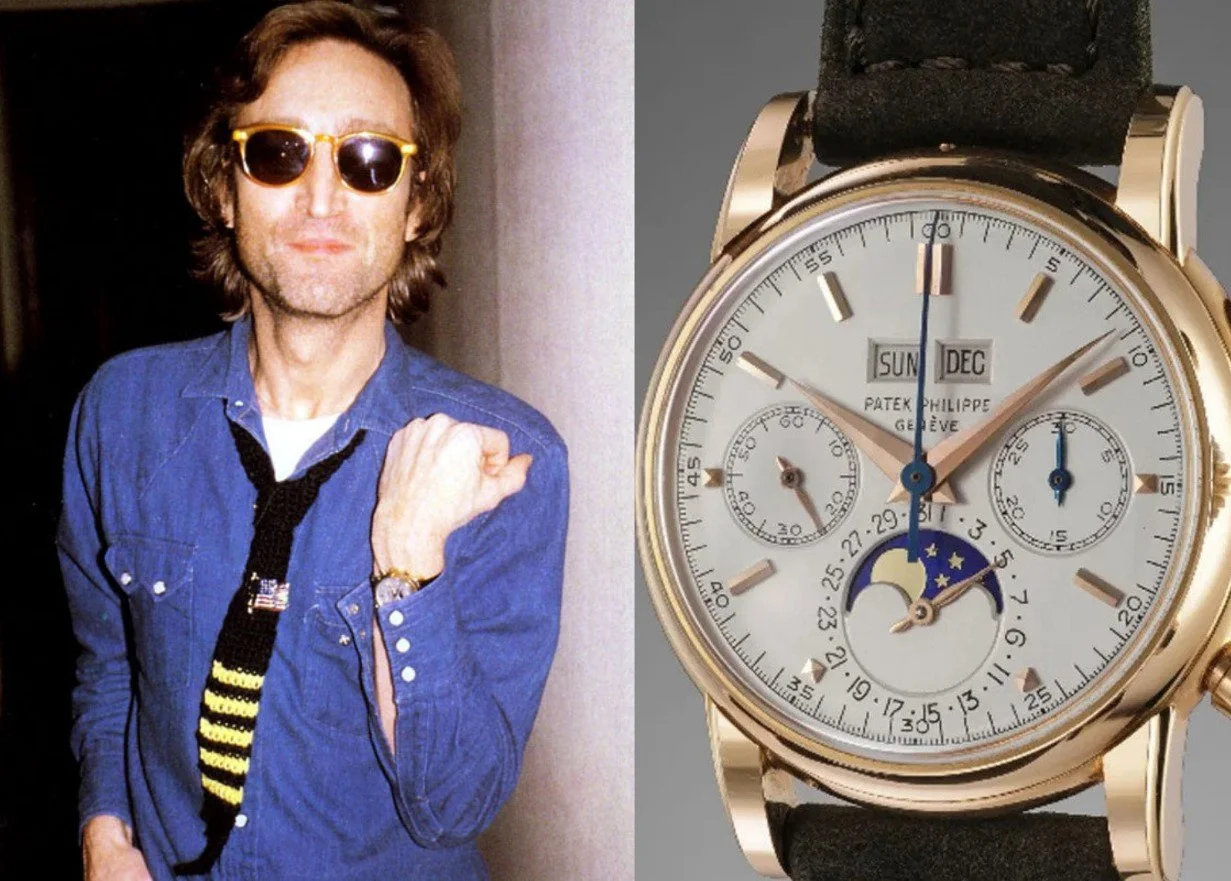
John Lennon and his fabled Patek Philippe 2499. There are only 349 in the world, each one runs you at least $1,000,000, and I imagine this one is the most expensive. John’s watch was stolen only to reemerge 10 years later at an auction house in Geneva Switzerland.
The crew of the Artemis II wore a quartz Omega Speedmaster X-33 strapped to their left arms when they launched to the moon on April 1st. It was released in 1998 and is nicknamed the ‘Marswatch’. Nasa and Omega’s Speedmaster have a storied history, beginning with Buzz Aldrin wearing one when he walked on the moon.
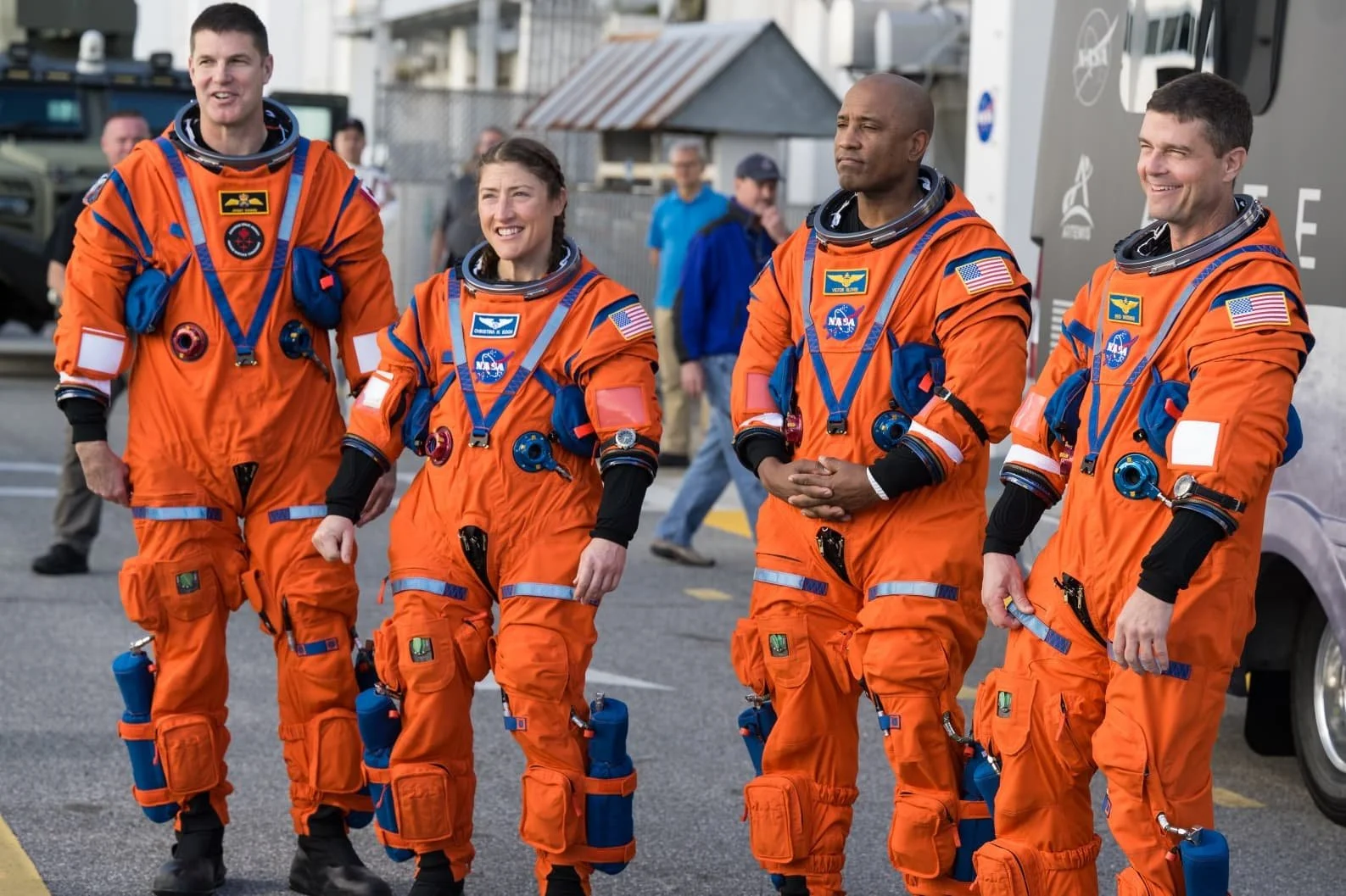
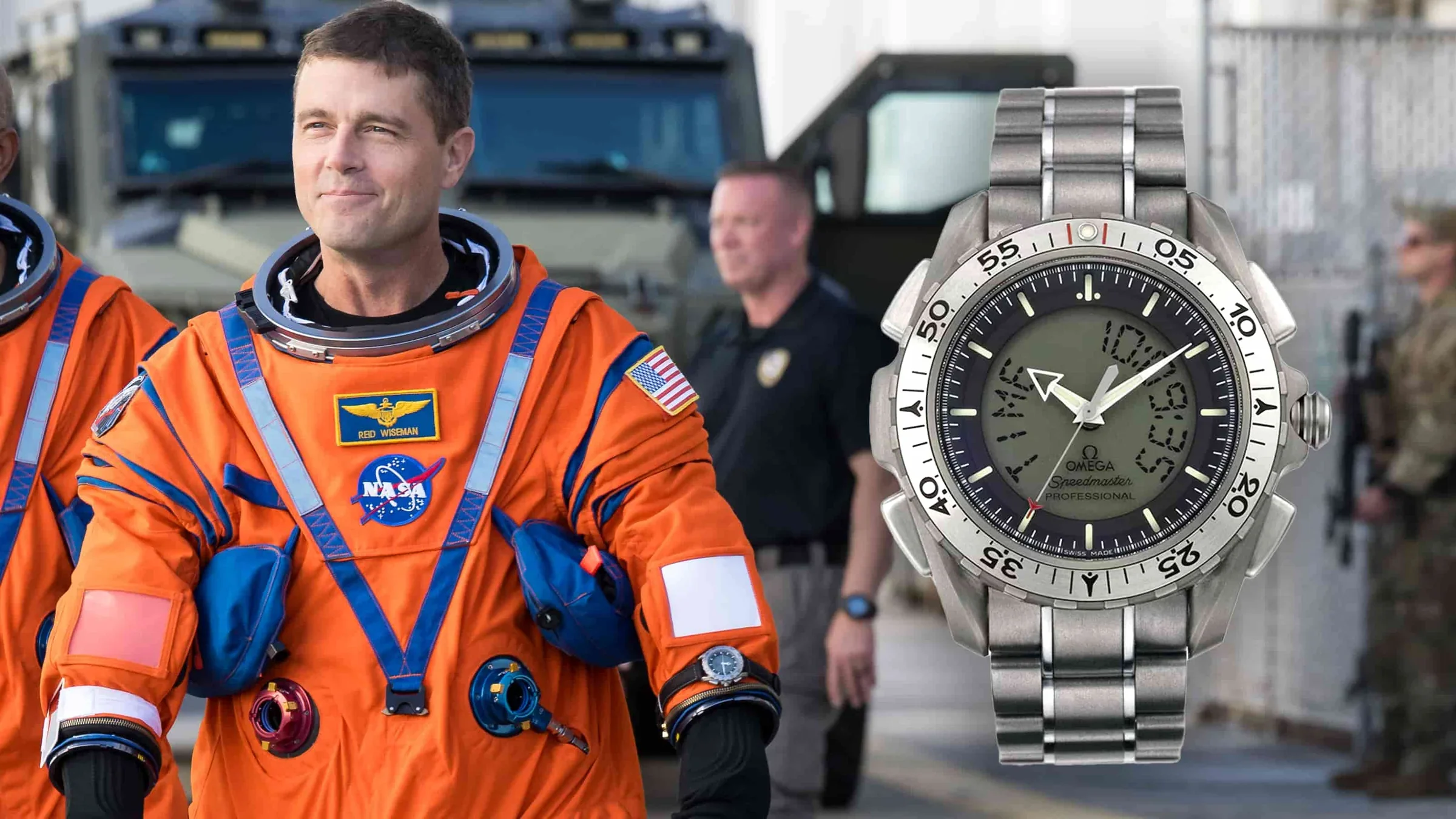
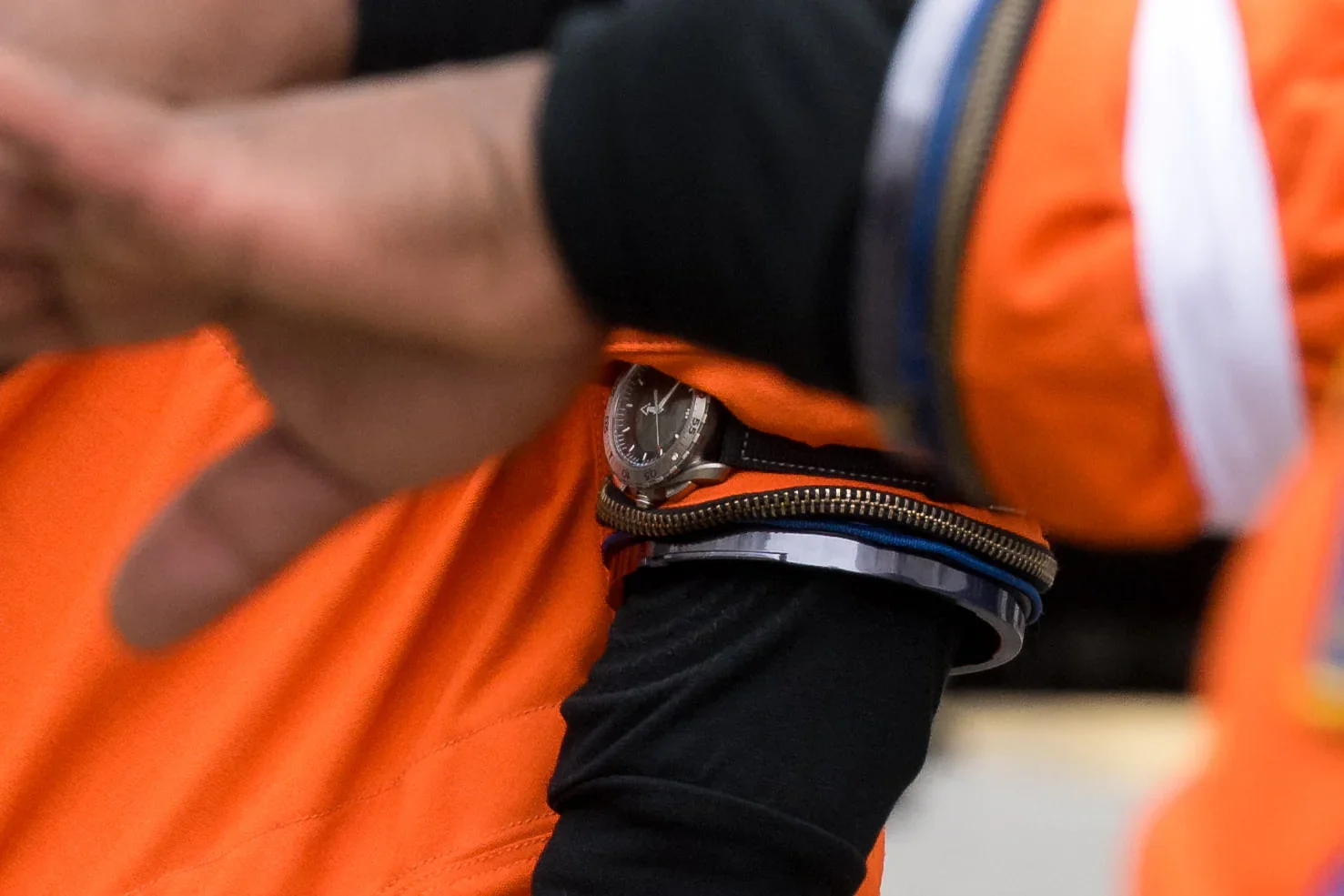
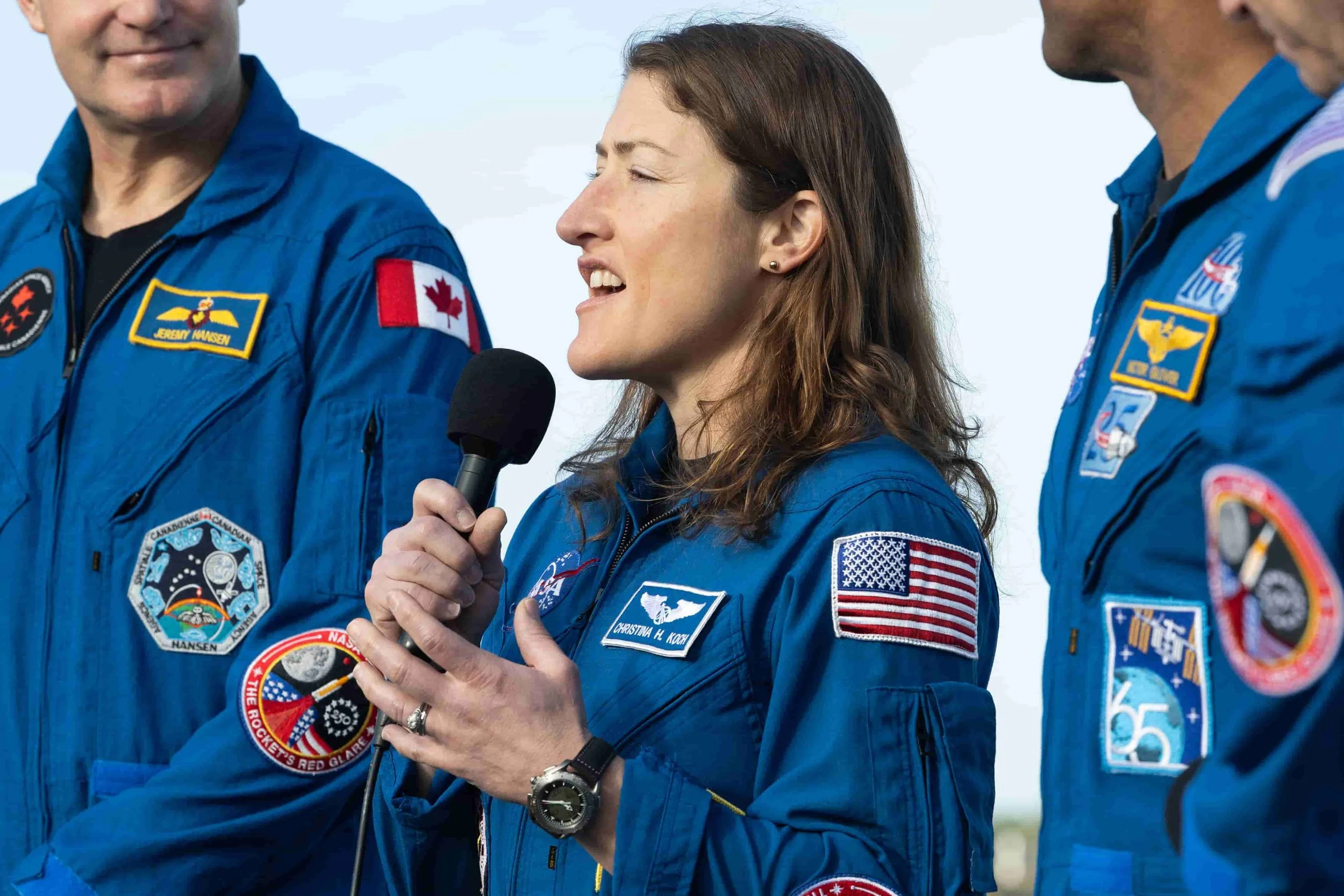
When quartz watches were invented, the number of Swiss watch companies shrunk by 2/3rds. The world called it the “quartz revolution” while the Swiss more lovingly referred to it as the “quartz crisis”. A mechanical watch is a tool, and a quartz watch does its job cheaper, easier, and better. Sound familiar? All the sudden, the main purpose of a mechanical watch, namely to tell time accurately, was superseded by new technology. So why does anybody buy a mechanical watch anymore, especially when they’re much more expensive? Is it purely as a flex? Are they idiots? All I can say is that while I might be an idiot, I don’t wear a watch as a flex, but I also hardly wear it to tell the time. I wear a watch for the same reason that I put paintings on my wall. They are charming reminders. They point me toward the same unnamable thing.
I’ve spent a lot of time trying to figure out what separates artificial intelligence from human consciousness. I think it’s that unnamable thing. People always speak as if AI learns in the same way that people learn. They say that if it walks like a duck and talks like a duck then it’s probably a duck, and AI is the greatest duck mimic ever created. At what point does mimicry become actuality? The key for me is, of course, the process. AI can take the same inputs as human (like a paragraph of text) and output the same thing as a human (like a digital picture). But the middle bit is entirely different⁵. I don’t care what AI CEO’s say. And crucially, all AI can do is interface with documents. What do I mean by documents? Pictures, text, records, data. A document is a map of some territory. An abstraction of something more real. A flattened version of that which it represents. The signifier and the signified. The shadows on the wall of Plato’s cave. Something is always lost in translation when creating a map, therefore AI is trained upon, and is always operating under, a lesser reality. Granted, computers in general are much better at processing documents than any human will ever be, and AI is the top of the heap in that regard. But the world isn’t documents. The universe isn’t words. The rock band isn’t a record. The map is not the territory. Perhaps reality is something that can’t be fully documented⁶.
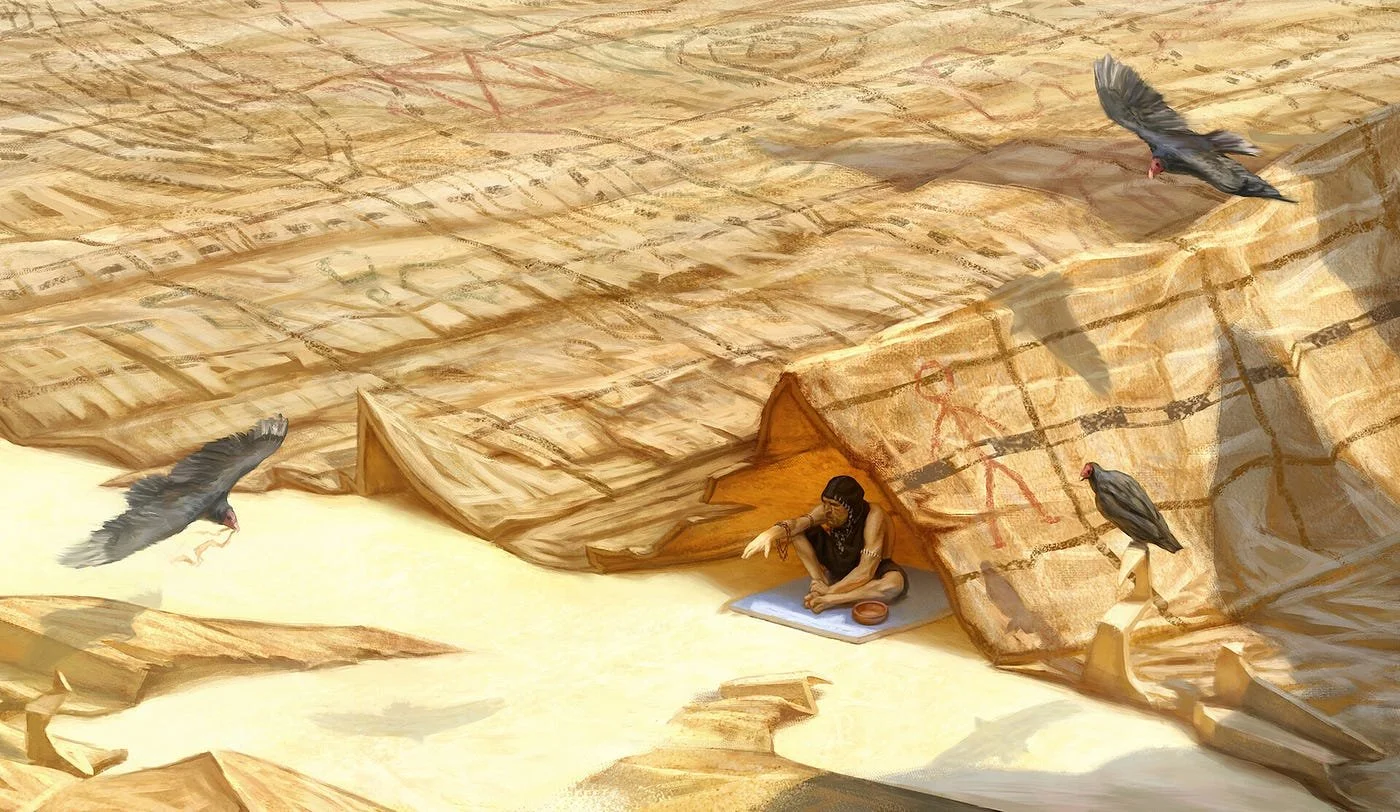
“On Exactitude in Science” - Tim Brumley
This leads me to my most important question. What are the parts of you that cannot be documented? A camera can create a more accurate document of a persons likeness than a painter, a quartz watch can more accurately measure the passage of time than a mechanical watch, and AI can create pictures, paragraphs, code, etc faster (and in many cases better) than most of humanity. But if it cannot be turned into a document it’s entirely outside the realm of AI. The gap between “reality” and the document, between the territory and the map, is where that unnamable thing exists. So I’ll ask again. What are the parts of you that cannot be documented, cannot be measured? Whatever those parts are, I think they are about to become much more important.
“Whatever you now find weird, ugly, uncomfortable and nasty about a new medium will surely become its signature. CD distortion, the jitteriness of digital video, the crap sound of 8-bit - all of these will be cherished and emulated as soon as they can be avoided. It’s the sound of failure: so much modern art is the sound of things going out of control, of a medium pushing to its limits and breaking apart. The distorted guitar sound is the sound of something too loud for the medium supposed to carry it. The blues singer with the cracked voice is the sound of an emotional cry too powerful for the throat that releases it. The excitement of grainy film, of bleached-out black and white, is the excitement of witnessing events too momentous for the medium assigned to record them.”
― Brian Eno, A Year With Swollen Appendices
Footnote¹ (neo-luddite): In 1811, during the textile revolution, many textile workers organized under the mythical “General Ludd” to protect their wages and jobs from the threat of new technologies. They’re best known for straight up destroying textile machines as a form of protest. The prefix of “neo” here just means “new”.
Footnote² (higher and higher fidelity): I’m not entirely convinced that the camera captures “reality” any more accurately than a painting. Instead, a camera is merely better at mimicking our sense of sight, which we already know is limited at the very least to a small band of the electromagnetic spectrum, and that’s just from what we’ve been able to find so far. Our senses evolved in service of us reproducing more successfully, not in service of acquiring Truth. The humans that sometimes mistook a bush for a predator lived longer than the ones that didn’t. The ability to interface with “objective” reality, if we’ve got it at all, is a happy accident.
Footnote³ (late twenties): I’ve developed a system around your twenties. 21-23 is your early twenties, 24-26 is your mid twenties, and 27-29 is your late twenties. When you’re 21 you’re just in your early twenties, when you’re 22 you’re in your mid-early twenties, and when you’re 23 you’re in your late-early twenties. Hopefully the pattern is clear enough from there. When you’re 20 you’re just plain 20. So as I write this I’m in my early-late twenties. The newest and least developed part of the system is that idea that your early twenties are for exploration, your mid twenties are for consolidation, and your late twenties are for realization. You need to try a bunch of different stuff in your early twenties and then try to fit it all together in your mid twenties, maybe filter some stuff out to make it more coherent. Then in your late twenties once the machine has been running for a bit, once everything becomes a bit more real, you’ll be able to have some helpful realizations. Maybe you didn’t explore enough in your early twenties, maybe your value knobs weren’t quite right in your mid twenties. Now, as someone in their early-late twenties, these realizations are still very new to me. I’m still coming to grips with no longer being the youngest one in the room, and have yet to fully act upon them.
Footnote⁴ (battery powered watch): It’s called a quartz watch because there’s a tiny piece of quartz shaped into a tuning fork that vibrates at 32,768 Hz (32,768 times per second) when an electrical current is applied to it. A series of circuits use some fancy math to convert 32,768 signals per second into 1 signal per second, which makes the second hand turn etc. Interestingly, they landed on 32,768 Hz because it’s a power of 2, which is needed for the fancy math, and it’s the first power of 2 above 20,000 Hz, which is the highest frequency that humans can hear.
Footnote⁵ (entirely different): The way that we talk about AI is harmful and incorrect. We say things like “I asked ChatGPT x” and that “After thinking for a bit, ChatGPT said y”. We use the same words that we would when referring to an actual person. ChatGPT definitely processes the inputs you give it and then returns an output, but to equate that process with thinking and that output with speaking is inaccurate. Our brains are wet and warm, a computer is cold and dry. The “intelligence” part of artificial intelligence is actually just a reflection of how we think that we think, and because we don’t understand how our brains actually work, we made a machine that can match the inputs and outputs that we do understand. I know that people talk like this because it’s easy. It feels very natural to talk about AI like it’s a person. I do it all it the time. But how you talk about something influences how you conceptualize it. One needs to be able to do it while remembering that saying that an AI “speaks” is merely useful shorthand, a functional metaphor.
Footnote⁶ (fully documented): In 1658 Jorge Luis Borges wrote a one paragraph story titled “On Exactitude in Science”. It was made famous by Jean Baudrillard. It’s not terribly important that you know anything about those guys, but it felt proper to mention them. Anyway, in this very short story, Borges describes an empire that is obsessed with cartography, the creation of maps. They spend their years developing more and more accurate maps of their empire, and the maps get bigger and bigger to accommodate the information. “…the map of a single Province occupied the entirety of a City, and the map of the Empire, the entirety of a Province.” Eventually, they create a map “…whose size was that of the Empire, and which coincided point for point with it.” Incredible. Art may be seemingly useless, but that would be literally useless.